
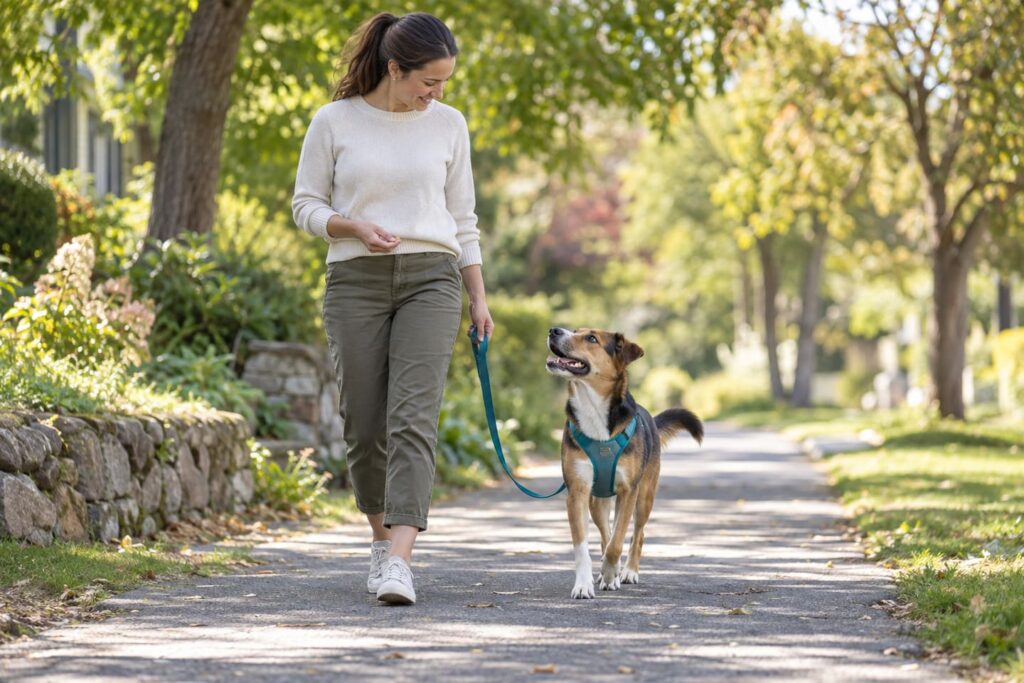
Learning how to train a dog to walk on a leash starts with a simple habit: reward your dog for staying close while the leash is loose. Begin somewhere quiet, practice a few steps at a time, and add distractions gradually. If pulling becomes the way your dog reaches interesting things, that habit gets more practice too.
The goal is a comfortable walk together—not a dog that stares at you or stays in a competition-style heel for the entire outing. There should be room for sniffing, exploring, and relaxed movement.
Choose Equipment That Makes Learning Clear
Start with a comfortable, well-fitted harness, a lightweight fixed-length leash around 6 feet long, small treats, and a quiet practice area. Check the fit and attachment before each session. The harness should allow normal movement without letting your dog slip out.
A fixed-length leash gives your dog a consistent amount of space. A retractable leash changes that distance and can maintain tension as the dog moves, so it is generally a less helpful choice for teaching the first loose-leash skills.
You can browse our dog leash collection to compare available styles and specifications. Choose equipment for the activity and your dog’s size; a different handle or braking mechanism does not replace training.
How to Train a Dog to Walk on a Leash: Six Steps
1. Make putting on the equipment comfortable
Introduce the harness and leash indoors. Reward calm investigation, then attach the leash for a brief supervised session. Let your dog move naturally beside you before asking for a walk. If they freeze or try to escape the equipment, slow down and return to an easier introduction.
2. Teach a reward marker
Choose a short word such as “yes.” Say it once, then immediately offer a small treat. Repeat a few times. The marker identifies the moment your dog does something you want; follow it with the promised reward.
3. Reward a useful starting position
Pick a side that is comfortable for you. With your dog beside you and slack in the leash, mark and deliver a treat near your leg. Avoid holding food so far ahead that your dog must jump or cross in front of you to reach it.
4. Take just one or two steps
Start moving. If your dog follows without tightening the leash, mark and reward. Repeat short stretches before expecting a longer distance. For example, your first “walk” might be from the kitchen doorway to the end of the hallway, with several rewards along the way.
5. Add turns and stops
Practice a gentle change of direction while your dog is paying attention. Give a brief cue before turning and reward them for following. Mix a few straight steps with an easy turn or pause, rather than making each repetition longer than the last.
6. Move outside in small stages
Try a familiar, quiet outdoor area before a busy sidewalk. Reward voluntary check-ins and walking with slack. If your dog struggles, shorten the distance or choose a calmer location. Success indoors does not automatically mean the same skill is ready for passing dogs, traffic, and food on the ground.
What to Do When Your Dog Pulls
When the leash tightens, stop moving forward without jerking it. Give your dog an opportunity to turn toward you or move back enough to restore slack. Then resume. Forward movement becomes available when the leash is loose.
If your dog cannot disengage from something ahead, create more distance and try an easier route instead of waiting through an escalating struggle. Reward before the next pull: if they reliably manage two loose steps, reinforce those two steps rather than waiting for five.
Watch for a repeated pattern of pulling, returning for food, and immediately pulling again. Make the next repetition shorter and reward your dog while they are already walking near you. The behavior you want to strengthen is the relaxed walking between resets.
A Short Practice Session You Can Repeat
Here is an example session structure, not a deadline for progress. Finish while your dog is still comfortable and engaged.
| Part | What to practice |
|---|---|
| Settle in | Attach the leash and reward a calm start. |
| Short repetitions | Walk a few steps, reward slack, and pause. |
| One easy change | Add a gentle turn or move to a slightly different spot. |
| Finish | Offer a sniffing break or another activity your dog enjoys. |
Sniffing can be part of the reward. Walk toward an interesting patch with a loose leash, then use a release cue such as “go sniff.” You can also play a simple follow-me game by changing your pace gently and rewarding your dog for noticing. Keep exploration and training compatible, rather than treating every sniff as a mistake.
Troubleshoot Common Leash-Training Problems
- Your dog walks well indoors but pulls outside: reduce the difficulty. Practice somewhere quieter and reward more frequently.
- Your dog bites the leash: pause the walking game and help them settle. Avoid turning the leash into a tug toy; keep loose loops from swinging in their face.
- Your dog ignores food near distractions: move farther away. A more exciting treat cannot always compensate for a situation that is too difficult.
- Your dog stops and refuses to move: check the surroundings and equipment instead of dragging them. A sudden change, apparent pain, or discomfort warrants a veterinary assessment.
- Your dog repeatedly lunges or seems frightened: seek help from a qualified reward-based trainer. Rehearsing the same overwhelming encounter is not a useful training progression.
Frequently Asked Questions
How long does leash training take?
There is no reliable one-week promise. Progress depends on your dog’s previous habits, the environment, and consistent practice. Track small improvements, such as more relaxed steps or an easier recovery after a distraction.
Can an adult dog learn to stop pulling?
Yes. Use the same gradual approach and reward the behavior you want. An established pulling habit may require returning to very easy practice conditions.
Should my dog always walk on the left?
Either side can work for everyday walking. Choose a starting side for clear practice, and avoid encouraging your dog to weave across your path.
Do I have to give a treat every few steps forever?
No. As the skill becomes reliable, gradually vary the distance between rewards and include access to sniffing and forward movement. Make rewards more frequent again when the surroundings become harder.
What should I do on the next walk?
Choose one quiet stretch and practice a few successful steps. Reward slack before pulling starts, pause when the leash tightens, and leave time for exploration. Build from the level your dog can handle today.